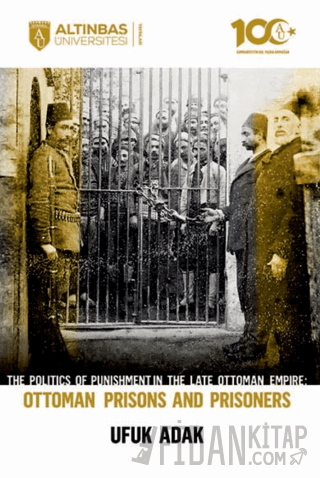

This book examines the politics of punishment and the implementation of prison reform in the late Ottoman Empire, specifically focusing on the significant Eastern Mediterranean port cities of Istanbul, Izmir, and Salonica. Drawing from a wide array of primary sources, including the Ottoman Archives, Ottoman and British newspapers, penal codes, yearbooks, architectural and city plans, photographs, and illustrations, the analysis of the transformation of prisons in the 19th and 20th centuries covers various aspects such as health, hygiene, prison labor, prison architecture, and urban development.
During the Tanzimat period, Ottoman reform efforts led to the construction of numerous public buildings in Ottoman cities, such as military barracks, hospitals, government palaces, clock towers, and prisons. As with these other symbols of modern state power, prison reform became an important site for the standardization of government authority. By including state and non-state perspectives, this work explores how punishment took on novel political importance for Ottoman officials and prisoners in the late Ottoman Empire, especially evident in the shift from dungeons to purposefully built prisons.
This book examines the politics of punishment and the implementation of prison reform in the late Ottoman Empire, specifically focusing on the significant Eastern Mediterranean port cities of Istanbul, Izmir, and Salonica. Drawing from a wide array of primary sources, including the Ottoman Archives, Ottoman and British newspapers, penal codes, yearbooks, architectural and city plans, photographs, and illustrations, the analysis of the transformation of prisons in the 19th and 20th centuries covers various aspects such as health, hygiene, prison labor, prison architecture, and urban development.
During the Tanzimat period, Ottoman reform efforts led to the construction of numerous public buildings in Ottoman cities, such as military barracks, hospitals, government palaces, clock towers, and prisons. As with these other symbols of modern state power, prison reform became an important site for the standardization of government authority. By including state and non-state perspectives, this work explores how punishment took on novel political importance for Ottoman officials and prisoners in the late Ottoman Empire, especially evident in the shift from dungeons to purposefully built prisons.

-
%11İNDİRİM570,00TL 507,30TL
-
%11İNDİRİM600,00TL 534,00TL
-
%11İNDİRİM170,00TL 151,30TL
-
%11İNDİRİM240,00TL 213,60TL
-
-
-
%11İNDİRİM300,00TL 267,00TL
-
%11İNDİRİM650,00TL 578,50TL
-
-
%11İNDİRİM200,00TL 178,00TL